

Courses currently taught
A concise overview of six courses in land studies, real estate markets, and digital technologies, with links to their learning platforms.
Teaching Areas and Courses
My teaching activities span land management and real estate, connecting foundational knowledge, market analysis, digital technologies and practice-oriented learning. These short introductions help students find relevant topics and access their learning platforms.
Land Economics, Markets and Valuation
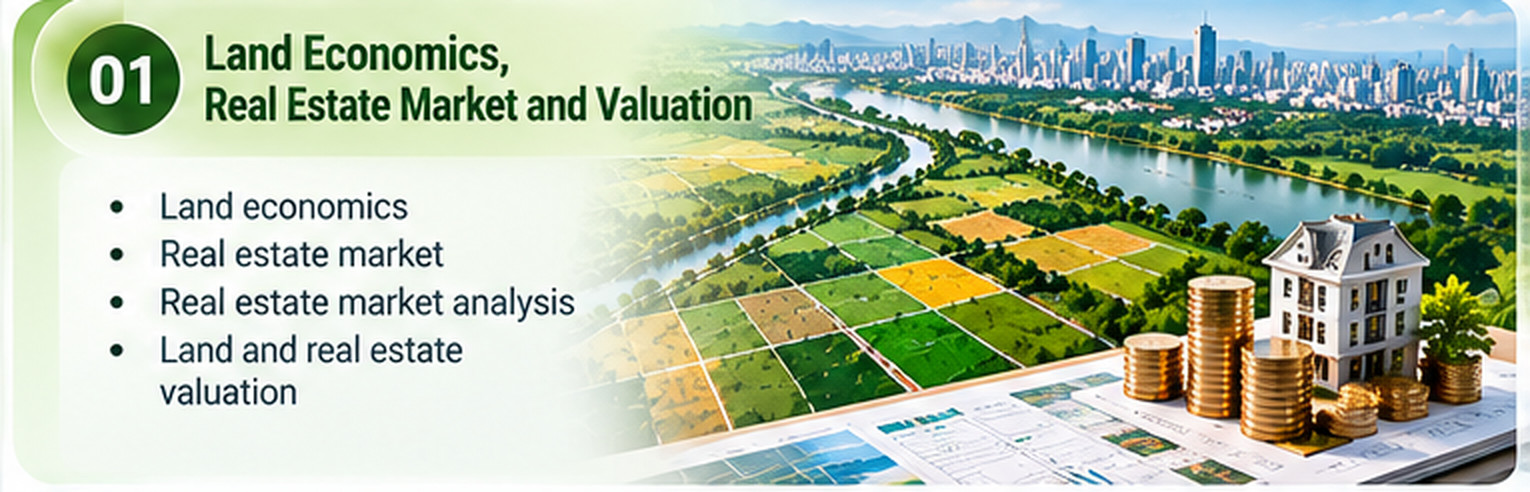
Land Economics
Explore land as an economic resource, land value and land-use efficiency, and how allocation and use decisions relate to land management and development.
Real Estate Market
Study supply and demand, prices, market cycles, segments and policy impacts to develop a broad understanding of how real estate markets operate.
Real Estate Market Analysis
From field surveys and data validation to market indicators, statistics, regression and GIS maps; practice developing evidence-based market assessments.
Land and Real Estate Valuation
Co-taught course
Explore bases of value, market evidence and valuation approaches including comparison, cost, income and residual methods, with an emphasis on validating data and explaining conclusions.
Information, Analytics and Digital Business
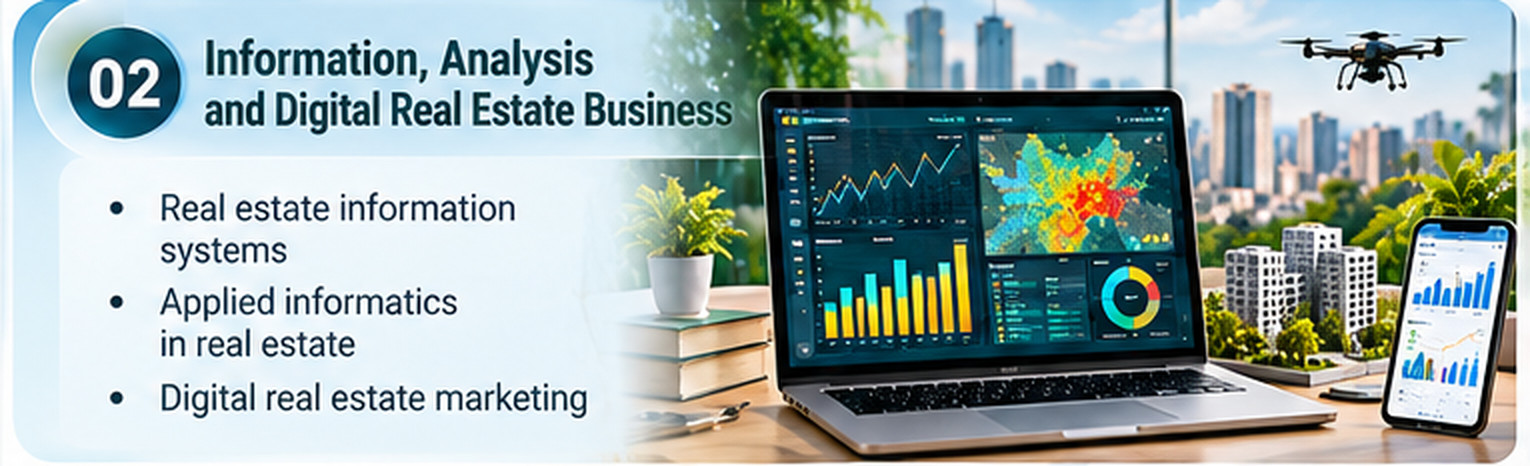
Real Estate Information Systems
Organize and use real estate databases, GIS, visualization and PropTech tools to support information management, analytics and decision-making.
Applied Informatics in Real Estate
Apply spreadsheets and financial models, SPSS/Python, GIS and online data to practical tasks in real estate investment, market analysis and management.
Digital Real Estate Marketing
Explore content strategy, SEO, social platforms, advertising and CRM; develop skills in campaign planning, performance measurement and transparent marketing.
Complementary Applications in Real Estate

Applied Fengshui
Examine feng shui as a cultural framework and advisory practice; explore site forms, orientations, Eight Mansions and interactive tools through real estate cases, using a critical perspective.
These are short course introductions, not substitutes for official syllabi. Class schedules, required resources, assessment arrangements and sign-in requirements are communicated for each course and semester.
Explore the BDSNL knowledge portal ↗